MedLink
Flagship Healthcare & Real-Time Patient Telemetry Platform
Project Overview
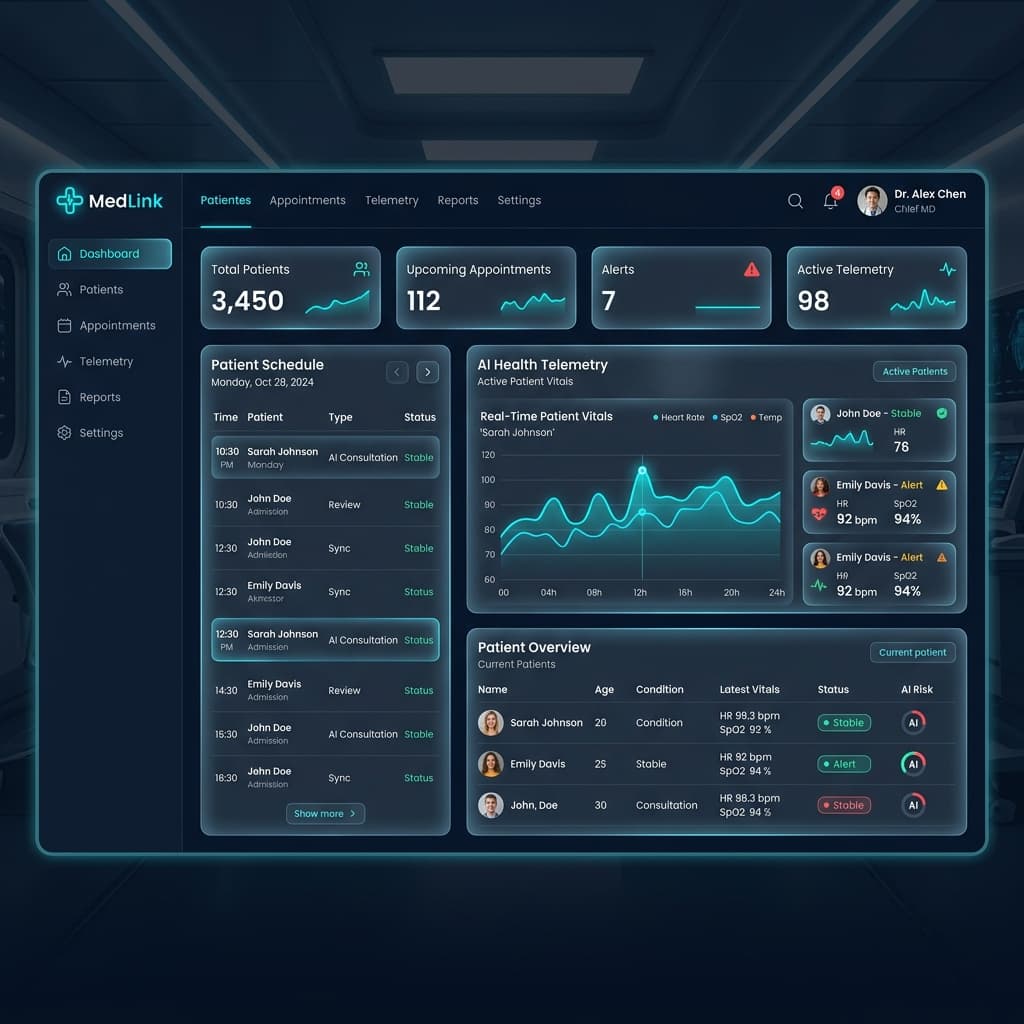
MedLink is an enterprise healthcare management system engineered for high-availability patient telemetry, appointment scheduling, and AI-driven clinical risk alerts. Built with Next.js SSR and microservices architecture, it seamlessly connects patients, doctors, and lab systems.
The Problem & Motivation
Legacy health management platforms suffered from slow 3s+ load times, fragile appointment scheduling logic causing double-booking conflicts, and poor real-time patient telemetry monitoring for critical care cases.
System Architecture Diagram
Key Engineering Features
Conflict-Free Appointment Scheduling
Automated real-time slot locking engine.
Patients can select specialist slots with sub-second confirmation. WebSockets notify doctors instantly while a Redis distributed lock prevents double-booking.
AI Health Telemetry & Risk Scoring
Real-time vitals tracking and automated alerts.
Monitors heart rate, SpO2, and temperature readings. Algorithmic risk scoring triggers priority flags for attending medical staff.
Server-Side Rendered Patient Portals
Instant page hydration with strict security.
Patient health records and lab histories are rendered via Next.js SSR, cutting first contentful paint down to under 1 second.
Full Technology Stack
Technical Challenges & Engineering Solutions
SSR Authentication Hydration Flicker
Challenge: Implementing SSR while maintaining user authentication was challenging because server components require token validation without introducing client hydration flicker.
Solution: Utilized HttpOnly JWT cookies evaluated inside Next.js edge middleware, validating user sessions on the server before rendering the HTML payload.
High-Volume Telemetry Socket Concurrency
Challenge: Handling hundreds of continuous patient vitals streams caused socket connection drops during traffic spikes.
Solution: Implemented a Redis Pub/Sub adapter to scale WebSocket connections horizontally across containerized Node.js workers.
Measurable Results & Outcomes
What I Learned
- Mastered Next.js Server Components vs Client Components boundary design for high-performance applications.
- Learned distributed locking mechanisms using Redis for zero-conflict scheduling.
- Gained deep hands-on expertise in AWS containerized deployments and security headers.